Free Assessment Written Quote First

Epoxy & Polyurethane Foundation Crack Injection in Ottawa

We inject foundation cracks from inside your basement: epoxy for dry, stable cracks and polyurethane for leaking ones. It costs $300-$1,200 per crack, takes a few hours, and cures fully in about 24 hours. No digging outside.

Get your free quote

Tell us what you're seeing. We reply within one business day.

What can we help with?

So the right crew reviews your project.

No obligation.

  • $300-$1,200 per crack
  • Done in a few hours
  • Full cure in about 24 hours
  • No digging outside

Choosing Between Epoxy and Polyurethane

How epoxy injection works

Epoxy is a rigid, structural resin. We seal the surface of the crack, then inject epoxy under pressure through a series of ports so it fills the crack from the inside out and bonds to the surrounding concrete. Epoxy bonds the two faces of the crack back together. Warranty terms are written into your quote. Epoxy is the right choice for dry, stable cracks where restoring strength matters more than flexibility.

Get a free assessment

How polyurethane injection works

Polyurethane expands as it cures and stays flexible afterward, so it follows the crack even if the wall moves slightly with the seasons. It's the standard choice for actively leaking cracks, since it expands into voids water is already using as a path through the wall and cures even in damp conditions. It won't restore structural rigidity the way epoxy does, so we don't use it where load-bearing strength is the priority.

Get a free assessment

Matched to your crack, not a default

The choice isn't cosmetic. Epoxy creates a rigid, structural bond that's appropriate for a stable, dry crack where restoring strength to the wall matters. Polyurethane stays flexible after curing and expands to fill voids, which makes it the better choice for a crack that's actively leaking or one that may still see minor seasonal movement. We check whether the crack is dry or damp, moving or stable, and how wide it is before choosing, rather than defaulting to one product for every job. We also check whether a crack has any active efflorescence, the white mineral deposit left behind as water evaporates through concrete, since it's a useful sign of how long moisture has been moving through that specific crack. Dry, Non-Leaking Crack: Epoxy, for a rigid, structural seal. Actively Leaking Crack: Polyurethane, for flexible, water-tolerant sealing. Crack With Slight Movement: Polyurethane, since it flexes rather than cracking again alongside it.

Get a free assessment

The Injection Process, Step by Step

We start by cleaning the crack and installing a series of injection ports directly over it, spaced according to the crack's length and width. A surface seal goes over the crack between the ports, then the epoxy or polyurethane is injected under controlled low pressure, starting from the bottom port and working up so the material fully fills the crack rather than pooling. Once cured, the ports and surface seal are ground flush, leaving a clean, sealed line rather than a visible patch. Initial cure takes a few hours, and both resins reach full cure in about 24 hours. We check the seal before we call the job done.

Crack Injection Cost and What Affects It

Crack injection typically runs $300 to $1,200 per crack, with the range driven mainly by crack length, accessibility, and whether it's a simple straight crack or one with multiple branches that each need their own injection ports. A crack behind finished drywall or in a hard-to-reach corner takes more labour than an open, accessible basement wall.

Maintaining an Injected Crack

After an epoxy or polyurethane injection, it is worth watching the surrounding wall for a season or two, particularly through spring thaw when hydrostatic pressure is highest. If grading or downspouts direct water toward the foundation near the repair, correcting that will reduce the chance of a new, separate crack forming nearby. Warranty terms for the injected crack are written into your quote.

Recent job

Recent Crack Injection Job in Kanata

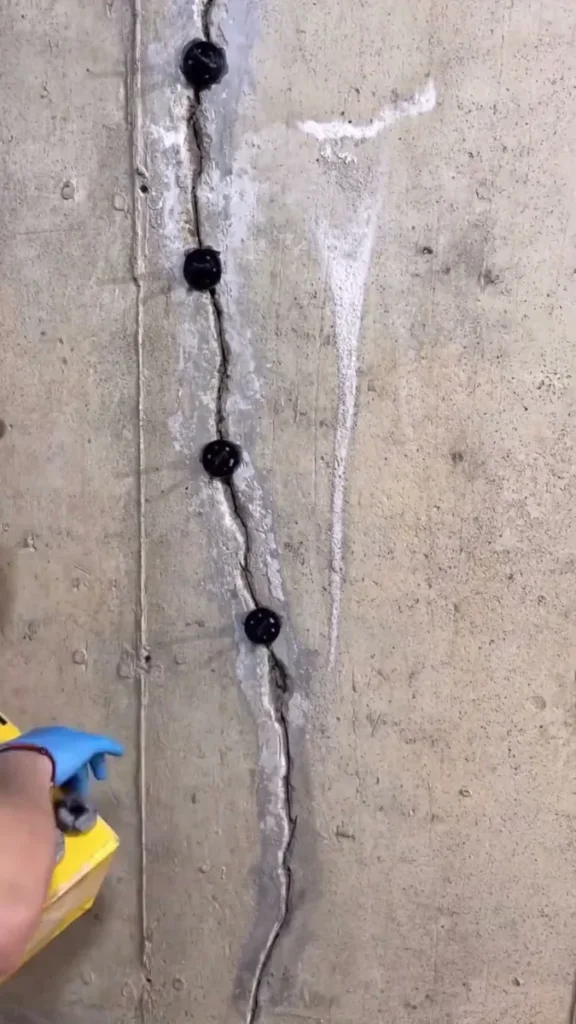
We injected a leaking vertical crack in a poured concrete basement wall in Kanata. A white mineral trail beside the crack showed water had already been coming through. Our crew set surface ports along the crack and pumped resin in port by port with an injection gun, filling the crack from inside the wall.

Foundation repair in Kanata
Our Process

How Crack Injection Works, Step by Step

1

Call or Request an Assessment

Tell us what you're seeing and where it is on the property.

2

On-Site Assessment

We inspect the affected area, confirm the cause, and check whether it's still active.

3

Written Quote

A specific scope of work and price in writing before we schedule anything.

4

Repair & Final Walkthrough

Work is carried out to the agreed scope, then we review it with you and confirm it matches the quote.

We were concerned about several foundation cracks in our Ottawa home. The team arrived on time, answered all our questions, and handled the repairs carefully. I would gladly recommend their services.

Michael T.

Client, Ottawa, foundation cracks

Frequently asked questions

Straight answers to what Ottawa property owners ask before booking. Still unsure? Call us.

Call (343) 504-4610
Does injection work on a crack that's still moving?

Polyurethane tolerates minor ongoing movement better than epoxy. A crack tied to active structural movement needs that movement addressed first, or the injection can fail.

How long does injection take to cure?

Initial cure is typically a few hours; both products reach full cure within about 24 hours, after which the wall can be finished or painted.

Does crack injection restore structural strength?

Epoxy restores a meaningful amount of the wall's original rigidity at the injected crack. Polyurethane seals the crack against water but is not chosen for structural strength.

What does injection cost per crack?

Typically $300-$1,200 per crack for a straightforward injection, depending on crack length and accessibility. Your written quote will confirm the exact price.

Will the injected crack be visible afterward?

The ports and surface seal are ground flush once cured, leaving a thin line rather than a raised patch. It's rarely invisible, but it's not a rough repair either.

Can injection be done in cold weather?

Interior injection can generally be done year-round since it's not weather-dependent the way exterior excavation is.

Ready to Get That Crack Sealed?

Free assessment, written quote, and a repair matched to your crack.

Back to top