Bowing & Cracked Basement Wall Repair in Ottawa, Ontario

Foundation Repair Experts repairs and stabilizes bowing and cracked basement walls throughout Ottawa, Ontario.

Get your free quote

Tell us about your project and we will get back to you within 24 hours.

What can we help with?

So the right crew reviews your project.

Response within one business day. No obligation.

What Causes a Bowing Basement Wall

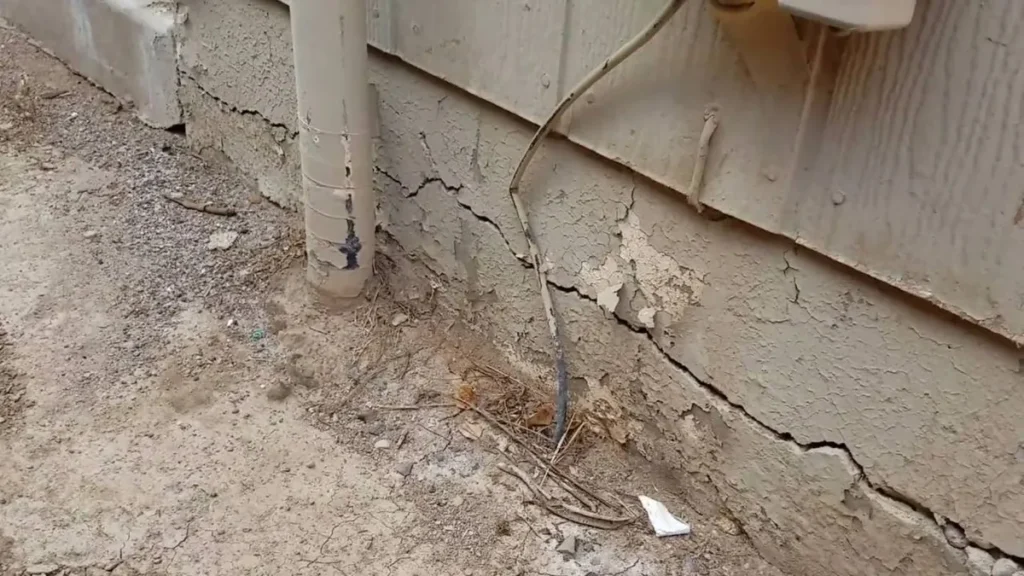
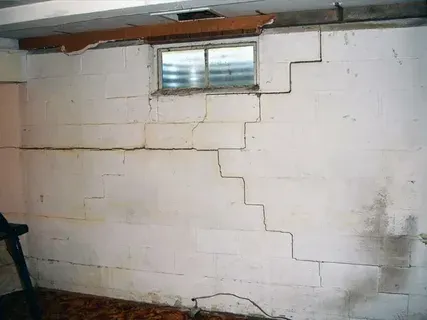
A basement wall bows when the soil pressing against it from outside pushes harder than the wall can resist. Around Ottawa, that pressure often comes from clay soil that expands as it absorbs water in spring and after heavy rain, or from hydrostatic pressure building up behind a wall with failed or missing drainage. The wall bends inward at its weakest point, usually mid-height, and the movement shows up as a horizontal crack, a stair-step crack near a corner, or a visible inward lean.
Carbon Fibre Wall Repair Straps

For walls with early to moderate bowing that have stopped moving, carbon fibre straps are bonded vertically to the interior wall face to resist further inward movement. They’re low-profile, don’t reduce basement floor space, and are typically the lower-cost option when the wall doesn’t need to be pushed back toward plumb.

Carbon Fibre, Steel Beams, or Anchors

Carbon fibre straps are bonded vertically along the wall and work well for walls with mild to moderate bowing that haven’t moved significantly, since they reinforce the wall in place without changing its position. Steel I-beams brace the wall from floor to joist and can apply more resistance for walls under heavier lateral pressure. Wall anchors go a step further, extending into stable soil beyond the wall and allowing gradual straightening over time in some cases. The degree of bowing and whether it’s still active determines which system applies.

Steel I-Beam & Wall Anchor Systems

Steel I-Beams

Braced against the floor joists above and the slab below to resist more significant inward pressure.

Wall Anchors

Anchored into stable soil outside the wall and tensioned from inside, sometimes able to help straighten the wall gradually over time.

Choosing a System

Based on how far the wall has moved, whether it's still moving, and what's outside the wall to anchor into.

Wall Repair Cost and What Affects It

Wall stabilization pricing depends heavily on which system applies. Carbon fibre straps typically run $500 to $1,000 per strap, with most walls needing several straps spaced along the bowed section. Full steel bracing for a wall under heavier lateral pressure runs $5,000 to $15,000 depending on the wall’s length and how many beams are needed. We confirm the degree of bowing and whether it’s still active on-site before recommending which system – and pricing – actually applies to your wall.

Carbon Fibre vs. Steel Beams for Wall Repair

Carbon fibre strips are bonded directly to the wall and work well for walls with mild to moderate bowing, since they resist further inward movement without adding bulk to a finished basement. Steel I-beams anchor into the floor and ceiling joists and can apply active pressure to help straighten a wall over time, which makes them the better option for more significant bowing. We measure the actual deflection of the wall before recommending either system, since the right choice depends on how far the wall has already moved and whether it’s still moving.

What Happens if a Bowing Wall Is Left Alone

A wall under lateral soil pressure doesn’t stabilize on its own. Left unaddressed, the same freeze-thaw cycles and clay soil expansion that started the movement generally continue it, and a wall that’s bowing slowly can eventually crack through or, in severe cases, fail structurally. Catching it early, while a strap or carbon fibre system can stop the movement, is almost always less invasive and less expensive than waiting until the wall requires full excavation and rebuilding. We re-measure the wall’s deflection at each visit if a repair is staged over time, so you can see whether the movement has actually stopped rather than taking it on faith.

How Much Wall Movement Is Too Much

Under 1 inch of bow

Often manageable with carbon fibre reinforcement alone.

1-2 inches of bow

Usually needs steel beams or anchors, not straps.

Over 2 inches or still moving

May need excavation and exterior repair in addition to interior reinforcement.

Our Process

How Bowing Wall Repair Works

1

Call or Request an Assessment

Tell us what you're seeing and where it is on the property.

2

On-Site Assessment

We inspect the affected area, confirm the cause, and check whether it's still active.

3

Written Quote

A specific scope of work and price in writing before we schedule anything.

4

Repair & Final Walkthrough

Work is carried out to the agreed scope, then we review it with you and confirm it matches the quote.

Frequently asked questions

Is a bowing basement wall an emergency?

A slowly bowing wall is usually not an immediate emergency, but a wall bowing quickly, cracking further, or leaning more than 2 inches should be assessed promptly.

Can a bowing wall be pushed back straight?

Wall anchors can gradually help straighten a wall over time in some cases; carbon fibre and steel beams are primarily designed to stop further movement rather than reverse it.

Do I need to excavate outside to fix a bowing wall?

Not always. Interior reinforcement (carbon fibre, steel beams, anchors) is often sufficient. Excavation becomes necessary if the wall also needs waterproofing or the movement is severe.

What causes basement walls to bow in the first place?

Lateral pressure from expansive clay soil or built-up groundwater against the wall is the most common cause in the Ottawa area.

Can a bowing wall be straightened back to its original position?

Anchor systems can sometimes allow gradual straightening over time, but carbon fibre and steel bracing are primarily designed to stop further movement rather than reverse existing bowing.

How do you decide between carbon fibre and steel bracing?

It depends on how much the wall has bowed and how much lateral pressure is still active – we assess this on-site rather than defaulting to one system.

Notice a Wall Leaning Inward?

Get it assessed before the movement gets worse.

Back to top