Foundation Underpinning & Piering in Ottawa, Ontario

Foundation Repair Experts underpins foundations and installs helical and push piers throughout Ottawa, Ontario.

Get your free quote

Tell us about your project and we will get back to you within 24 hours.

What can we help with?

So the right crew reviews your project.

Response within one business day. No obligation.

Bench Footing vs. Full Underpinning

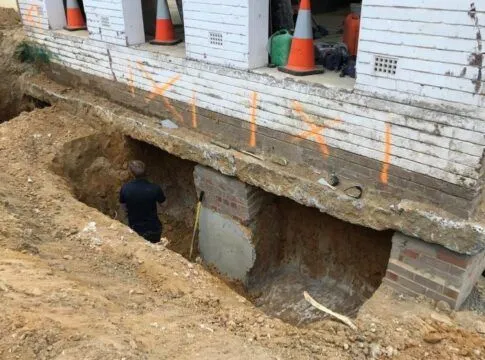
Underpinning extends a foundation footing deeper, in stages, to add ceiling height or bearing capacity. Bench footing keeps the existing wall in place and builds a lower step of new footing and wall in front of it, which is faster and less expensive but reduces the usable floor width slightly. Full underpinning removes and rebuilds the footing at the new depth, holding the original wall width but taking longer and costing more. Which one makes sense depends on the depth you need and the condition of the existing wall.
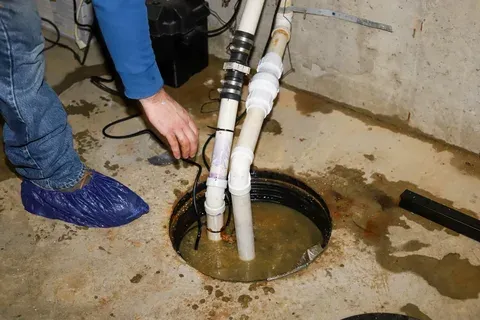
Helical & Push Piers

Piers are a different tool for a different problem: rather than adding depth, they transfer the weight of a settling foundation down to stable soil or bedrock. Helical piers are screwed into the ground and are well suited to lighter structures and additions; push piers are driven hydraulically and typically carry more load. Both can be used to stabilize a settling section and, in many cases, lift it back closer to level.

Signs Your Foundation May Need Underpinning

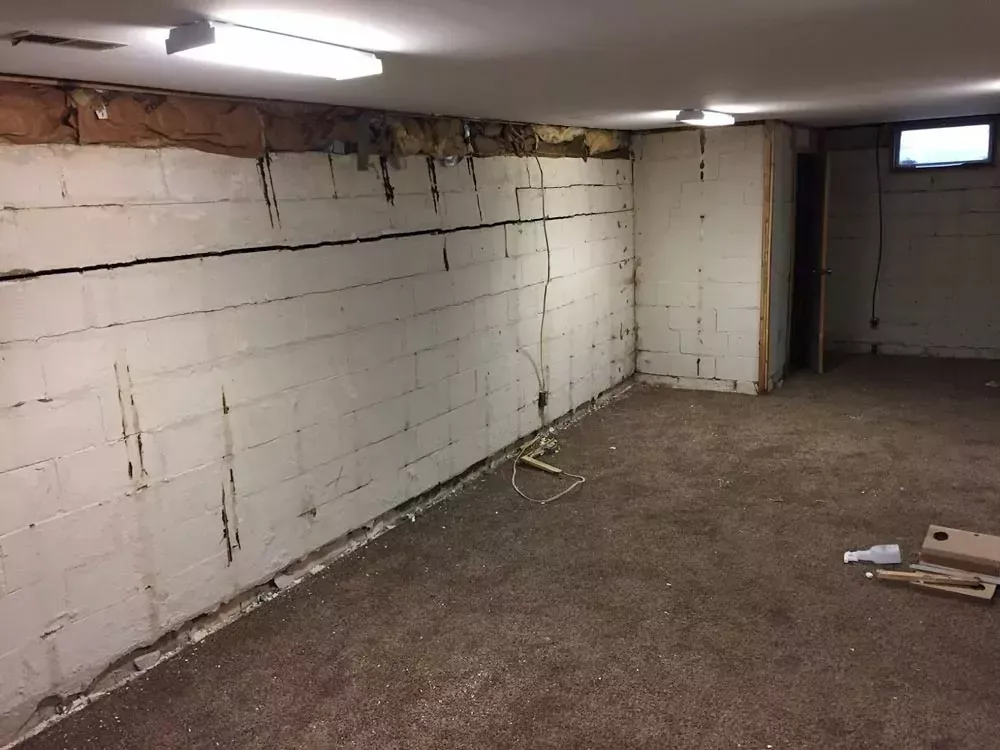
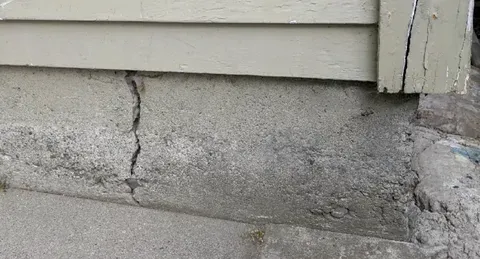
Doors and windows that have started sticking, floors with a new slope, visible gaps opening between a wall and the ceiling or floor trim, and cracks widening rather than staying stable are the most common signs that a foundation has settled enough to need underpinning rather than a surface repair. A basement that feels too low to finish comfortably is a different reason for the same work, driven by wanting more usable height rather than a structural problem. We confirm which situation applies during the on-site assessment before recommending the work.

When Underpinning Is the Right Fix (vs. Piering)

Need More Depth

Underpinning, when the goal is a taller or legal basement ceiling height.

Settling, Not Height

Piering, when a section is sinking and the goal is to stabilize and lift it.

Both Together

Some jobs combine underpinning for depth with piers under the deepest or weakest section.

Underpinning Cost and What Affects It

Underpinning typically runs $80 to $500 per linear foot depending mainly on target depth, with full-perimeter jobs on a larger home commonly running $30,000 to $100,000 or more. The existing footing’s condition, soil type, and how many sections need to be excavated and poured in sequence all affect the final price and timeline. Because the structure has to stay supported throughout, underpinning is priced and scheduled section by section rather than as a single lump job, and your written quote breaks down the sections involved.

Maintaining a Foundation After Underpinning

Once underpinning is complete, the new footing and piers do the structural work permanently, so there’s no ongoing maintenance specific to the underpinned section itself. It’s still good practice to keep an eye on grading and drainage around the property, since the same soil conditions that caused the original settlement can still affect other, non-underpinned sections of the foundation if water isn’t managed properly. We’ll point out during the final walkthrough whether any other section of your foundation looks like a future candidate for the same work.

How Long an Underpinning Project Takes

Underpinning is done in short sections, typically three to four feet at a time, so the wall above always has support while the new footing goes in below it. A single-wall or partial-perimeter job commonly takes one to two weeks; a full perimeter underpinning on a larger home can run several weeks since each section has to cure before the next one starts. We give you a specific timeline once we have surveyed the foundation and know how many sections the job actually needs.

What Underpinning Involves

Staged excavation

Work proceeds in short sections at a time so the structure stays supported throughout.

Engineering where required

Larger or full-perimeter jobs typically involve a structural engineer's review.

New footing and wall

The new concrete is poured and cured before the next section is started.

Our Process

How Foundation Underpinning Works

1

Call or Request an Assessment

Tell us what you're seeing and where it is on the property.

2

On-Site Assessment

We inspect the affected area, confirm the cause, and check whether it's still active.

3

Written Quote

A specific scope of work and price in writing before we schedule anything.

4

Repair & Final Walkthrough

Work is carried out to the agreed scope, then we review it with you and confirm it matches the quote.

Frequently asked questions

How long does underpinning take?

A single-section job commonly takes one to two weeks; a full perimeter on a larger home can run several weeks, staged so the structure stays supported.

Is underpinning noisy or disruptive?

Yes, expect excavation noise and dust for the duration of the work, both inside and around the perimeter of the home.

How many piers does a typical house need?

Most residential jobs use 8 to 15 piers, depending on the length of wall being stabilized and the load involved.

Can piers actually lift my foundation back to level?

In many cases, yes, piers can recover some or most of the lost elevation, though the amount depends on how long the settling has been happening and the soil conditions underneath.

What's the difference between bench footing and full underpinning?

Bench footing lowers the floor in sections with a stepped ledge and is faster; full underpinning replaces the footing itself for uniform headroom throughout, but takes longer and costs more.

Is underpinning noisy or disruptive to live through?

Yes, it involves excavation and concrete work inside the basement over one to several weeks, so it's more disruptive than a crack repair, though the structure stays supported throughout.

Considering Underpinning or Piering?

Get a free assessment and a written quote before you commit to either.

Back to top